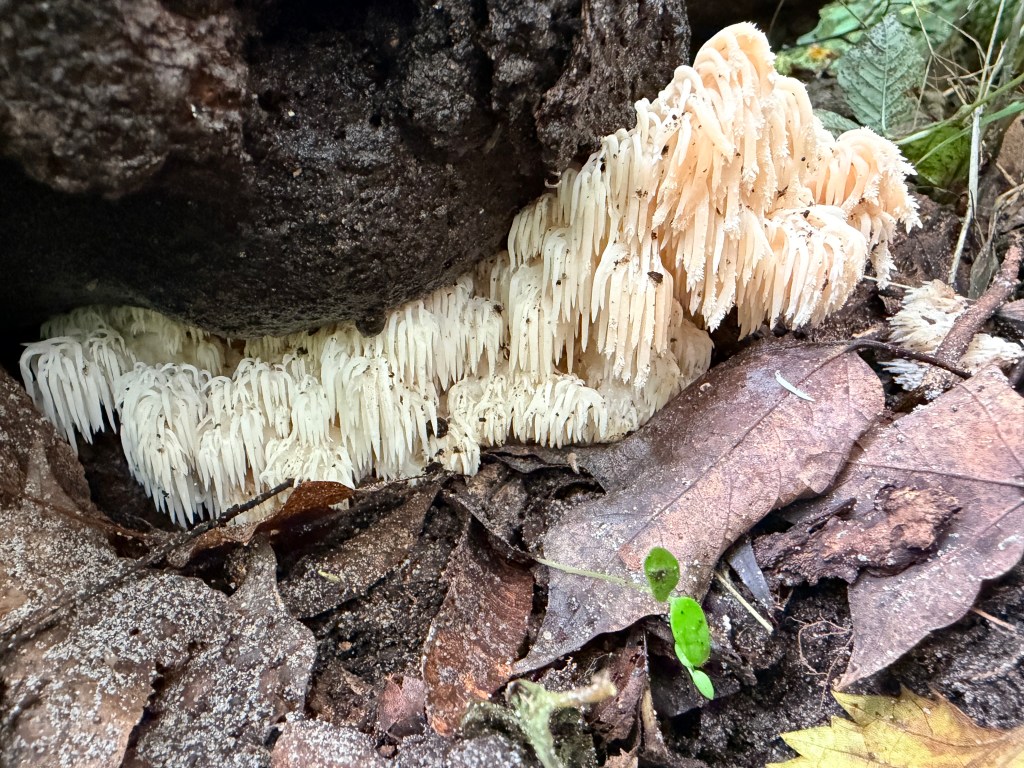
Bear’s tooth, related to the Lions Mane seen here as it grew from a nearly fully decayed, fallen hackberry log.
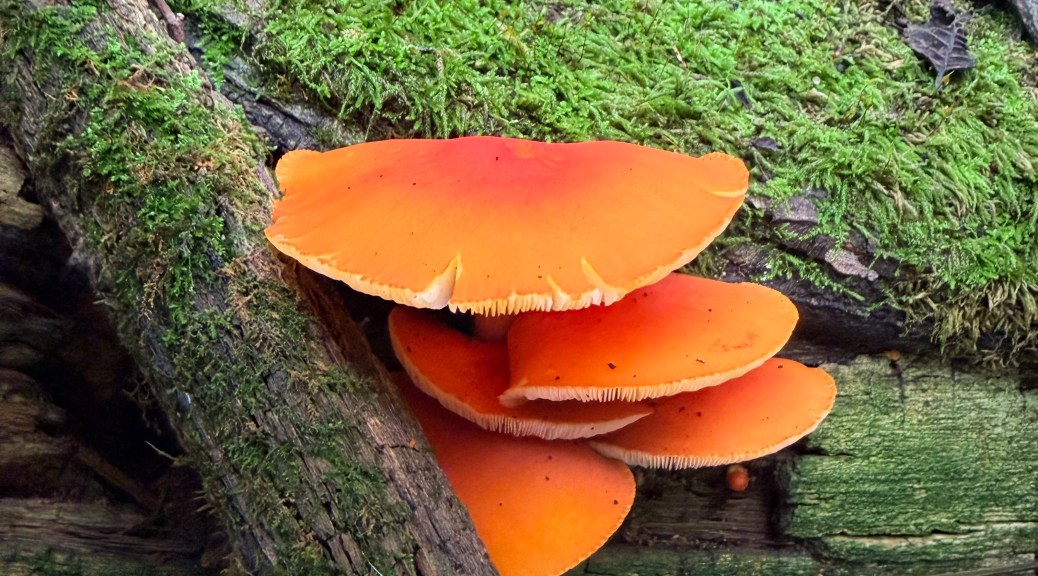
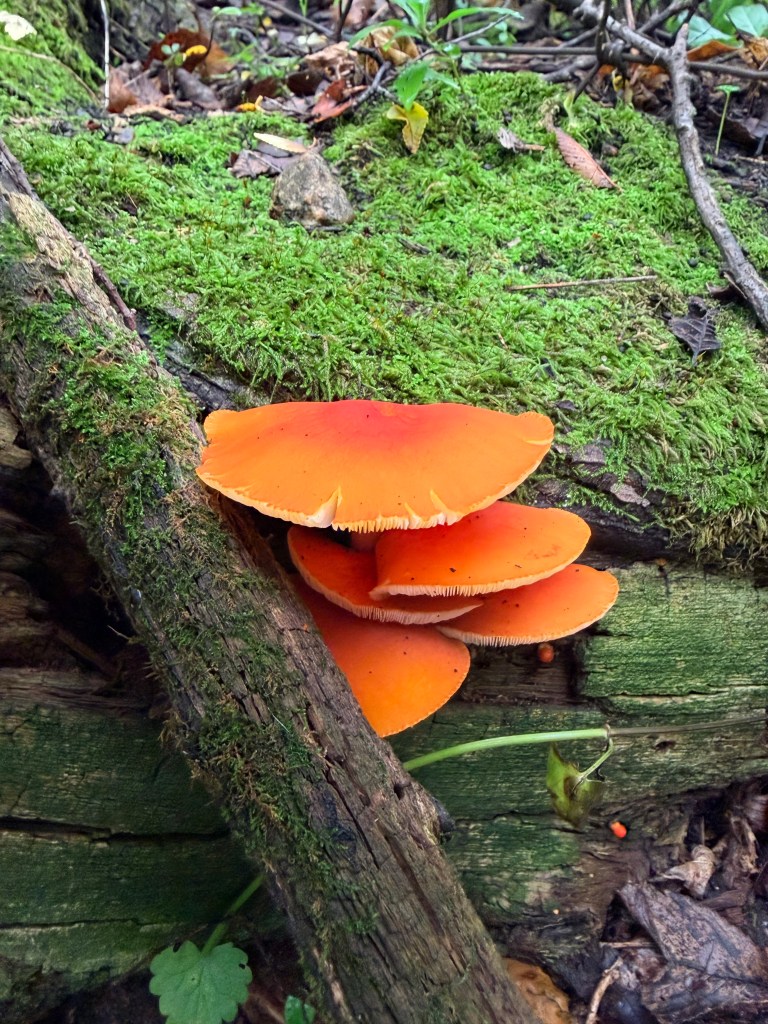
Late autumn rainfalls and warmer fronts produced ideal mushroom conditions. Bear’s Tooth and maitake being some found every year, (though bear’s tooth is rare enough to incite much joy!) the rare beauty this year is the Flame Shield mushroom. Having never seen this specific mushroom before, a bit of research ensued immediately. A quick search revealed this mushroom is VERY rare! Due to its bright color, it is known that it isn’t due to it being overlooked in the forest, rather it just doesn’t pop up all that often. Some mushroom experts have gone decades in search of one and still haven’t had the opportunity to see one in its natural habitat. Not known for its edibility, as it has some reported distress in consumers, and mild toxicity, and lacks enough substantial flesh to constitute a sought after edible, more importantly it is so rare it would be a shame to harvest it.
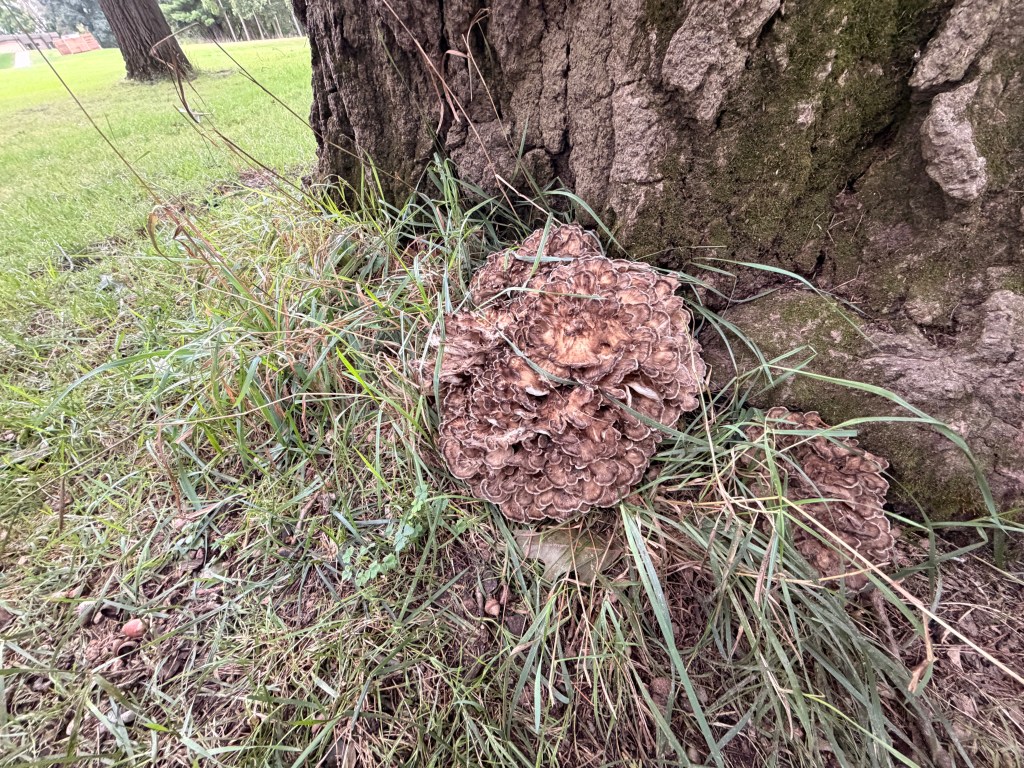
Flame Shield, with its brilliant sunset hues of yellows, oranges, and reds contrast the mossy hardwood it grows upon for picturesque photos.Maitake nestled just beneath its delightful host, the oak tree.
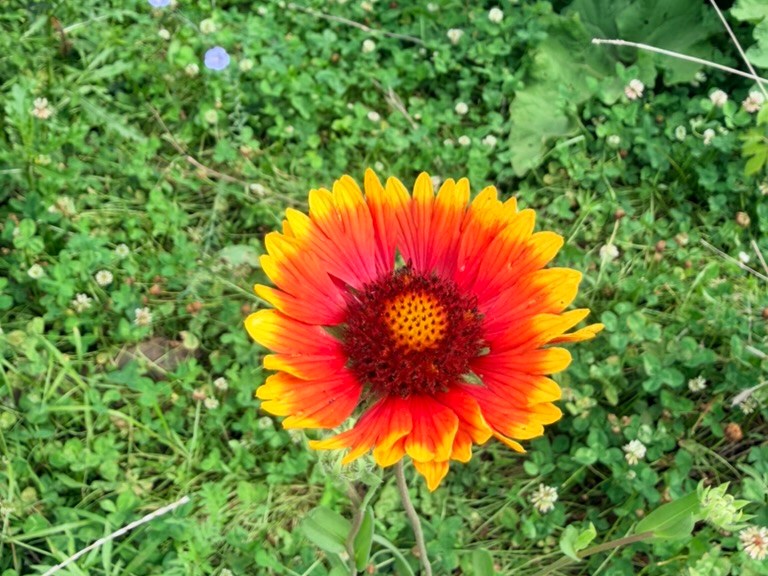
Known as Indian Blanket Flower, this wild growing beauty has quite a presence, both in aesthetics, legends and medicine.
LEGEND: A Native Master Weaver was very skilled and generous with weaving blankets within his tribe, and often used browns, reds, oranges and yellows in his talent. When he passed away, he was wrapped in one of his blankets, and the following spring, the earth sprang up with these flowers capturing the colors of his gift to share forever.
Makes one wonder what would grow where you rest should a legend be sparked by your life?
MEDICINE: It has been used from root to petal for several medicinal remedies over the centuries, and now recognized compounds are found in scientific research that fight bacteria and cancerous tumors.
Just prior to the lilacs blossoming, little grey morels started showing themselves. A couple of yellows started emerging now, all well-camoflauged as they are just tall enough to start peeking over the tops of the leaves.
Most finds so far have been on flatter topography, with the ability to receive sunshine all day rather than an extreme hillside with light being blocked for a portion of the day. Surely, soon to start springing up throughout hillsides all directioins week by week.
Little greys found, some freshly popped, and a few a bit sunkissed.
After a successful morel and asparagus forage, a golden hour recap of the evening here in this peaceful, wispy-grass-lined hill overlooking the river sealed a perfect day.
Rewilding By Means of Nature Forests, Foraging & Foxes